
Blog · Reactivos para biología molecular
Molecular Biology Lab Equipment for Reliable Workflows
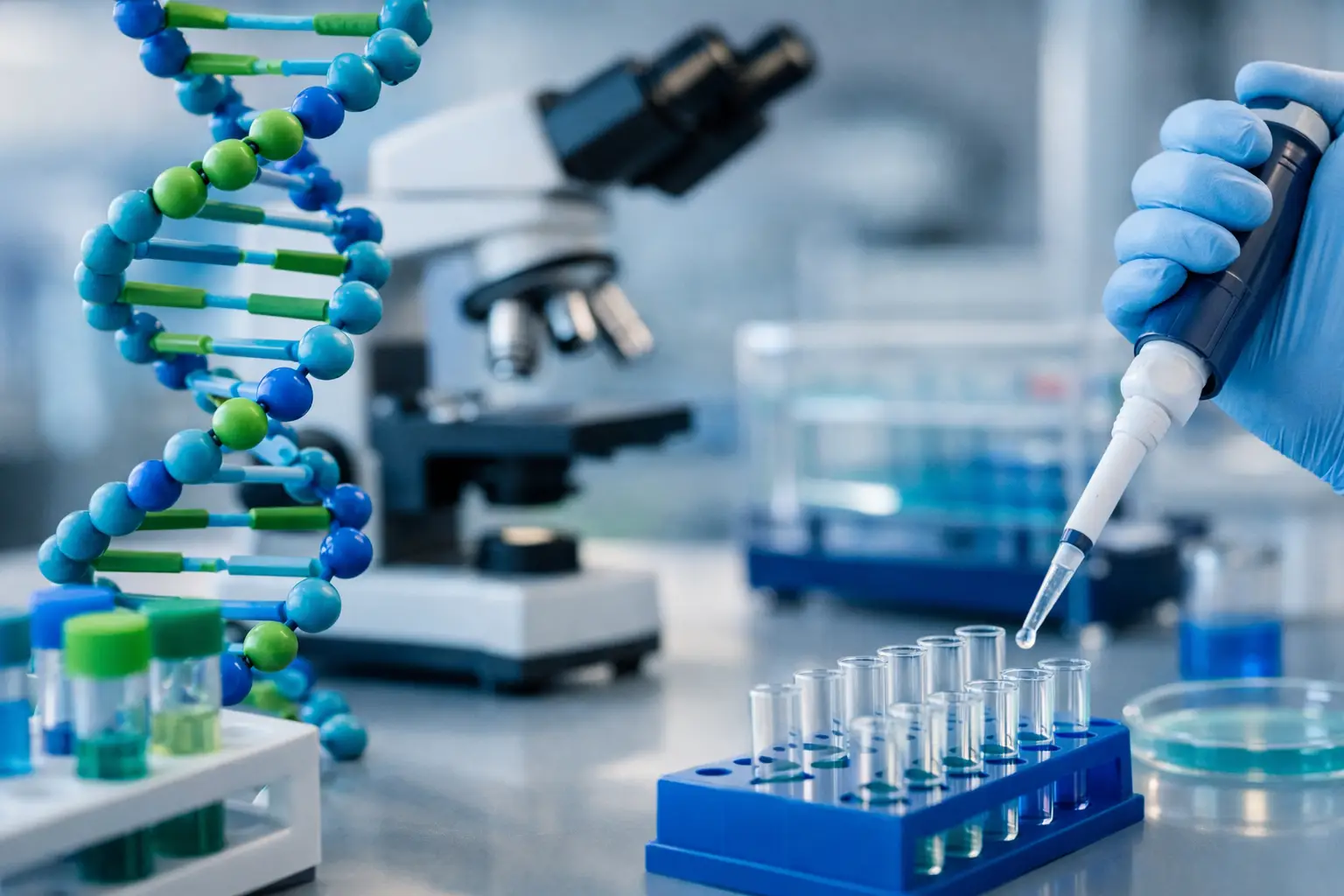
When a PCR fails because of cross-contamination or DNA extraction yields vary from one run to the next, molecular biology lab equipment and everyday working practices become operational priorities. In many laboratories, success depends less on theory than on maintaining workflow continuity, traceable data and results that can be repeated with confidence.
Molecular biology covers techniques used to study and manipulate nucleic acids and, in many cases, the proteins associated with their expression and regulation. In practice, this includes DNA and RNA extraction and quantification, amplification, detection, cloning and gene expression analysis. Its value lies not only in analytical sensitivity, but also in providing specific answers when other methods are slower or offer less resolution.
For research laboratories, these methods can help investigate hypotheses with greater precision. In clinical and diagnostic settings, they can detect specific targets with competitive turnaround times. In quality control, the food and pharmaceutical industries, and biotechnology, they can be used to check identity, purity, the presence of contaminants or process stability using reproducible methods.
What molecular biology brings to everyday laboratory work
The appeal of molecular biology is not that the techniques are new. Many have been part of routine laboratory work for years. Their value is in how well they fit demanding workflows. A laboratory does not adopt a technique simply because it is sensitive. It must also suit sample volumes, staff, turnaround times and documentation requirements.
Molecular biology can make a practical difference by enabling work with small sample quantities, distinguishing specific sequences and producing comparable data across batches when the workflow is set up correctly. It can also reduce uncertainty when phenotypic identification or conventional chemical testing is not enough.
That does not mean these methods are right for every situation. Technical complexity, cost per sample or the need for trained staff may make it worth considering alternatives. In other cases, the issue is not the technique itself, but a poor combination of molecular biology reagents, consumables and equipment.
Common molecular biology techniques
DNA and RNA extraction are often the starting point. If this stage goes wrong, the rest of the workflow is affected. Choosing between column-based methods, magnetic beads or organic protocols depends on the sample type, expected yield and purity required for the next application.
Conventional PCR remains useful for straightforward verification. qPCR adds quantification and greater process control, making it useful in diagnostics, gene expression studies and contamination control. For laboratories that need to detect multiple targets or work with more complex objectives, multiplex methods, RT-qPCR or digital systems may be appropriate.
Electrophoresis is still a useful supporting technique. Although some laboratories rely less on it as automated systems become more common, it remains a practical way to check integrity, fragment size or the presence of amplification products. Its moderate operating cost also makes it a regular choice.
Nucleic acid quantification and quality control are critical steps too. Concentration alone is not always enough. Depending on the application, purity, integrity and potential inhibitors also need to be assessed. A sample that appears suitable can still compromise PCR or sequencing if it contains salts, proteins or solvent residues.
Sequencing has greatly expanded the scope of molecular biology, but it is not always necessary. For routine work, targeted PCR and specific detection may be more efficient in terms of cost, time and data management. The right approach depends on the analytical objective, not on the complexity of the technology available.
Molecular biology lab equipment, consumables and results
Performance depends on more than the main instrument. A good thermal cycler can be let down by unsuitable tubes, poorly calibrated pipettes or tips that do not provide the aerosol protection the workflow requires. The final result reflects the whole system.
Micropipettes may seem like basic laboratory supplies, but they directly affect repeatability. The same is true of filter tips, nuclease-free tubes, PCR plates, cooling racks and sample storage systems. For RNA work, where degradation can happen easily, consumable quality matters as much as the technician’s skill.
Supporting equipment also plays an important role. Microcentrifuges, vortex mixers, cabinets, heating blocks, suitable freezing, water purification systems and cooling solutions all contribute to the working setup. If one of these elements fails or is not sized for the laboratory’s workload, delays, repeat runs and deviations can increase operating costs.
Format compatibility is another key consideration. Kits, plates, seals and instruments do not always work equally well together. For recurring purchases, check technical specifications as well as consistent availability, replenishment times and batch-to-batch uniformity. For many laboratories, reliable continuity matters as much as a small difference in unit cost.
How to choose molecular biology supplies
A common purchasing mistake is to order by broad product category. Asking for “PCR reagents” or “extraction materials” is rarely specific enough. Start with the application, sample type and documentation requirements. An academic laboratory with flexible validation needs is not the same as a regulated environment with fixed procedures.
Review the complete workflow first. Selection will vary depending on whether the laboratory handles clinical samples, food, tissue, cell cultures or environmental matrices. It also depends on whether the goal is screening, confirmation, quantification or sample storage. Taking this wider view helps avoid fragmented purchases and incompatibilities.
Next, consider supply stability. In molecular biology, changing a consumable or reagent halfway through a series may mean repeating internal checks. Centralising purchases with a supplier that offers a broad catalogue, technical support and access to recognised brands can help maintain consistency between work campaigns. The aim is not only immediate availability, but dependable supply over time.
Service matters too. When a problem arises, the question is often not just which product to buy, but whether it will work with the installed instrument, validated protocol and expected performance. Technically informed support can save time and reduce improvised decisions. For laboratories that purchase regularly, this can directly improve efficiency.
Common mistakes in molecular biology laboratories
Many problems occur before the final amplification step. Poor sample collection, unsuitable storage or inadequate separation between pre-PCR and post-PCR areas can undermine even a well-optimised assay. Molecular techniques are sensitive, and that sensitivity can work both for and against the user.
It is also easy to underestimate the training required for tasks that seem routine. Pipetting small volumes, preparing master mixes and handling RNA all require consistent habits. Laboratories that document and standardise these steps often achieve better results than those with more advanced equipment but less established procedures.
Another frequent mistake is applying the same protocol to different matrices. A method that works well with cell cultures may not perform as well with tissue, swabs or samples containing high levels of inhibitors. Adjusting the workflow is a practical necessity, not a weakness in the method.
Molecular biology equipment and operational efficiency
As workloads grow, the focus shifts beyond sensitivity and specificity to productivity. Preparation time, ease of cleaning, contamination risk, batch traceability and replenishment capacity all become important purchasing considerations alongside technical specifications.
For this reason, many laboratories review their supply strategy with day-to-day operations in mind. Fewer fragmented orders, better control of critical stock and specialist advice when an issue arises or a method expands can all make a difference. A distributor able to supply instrumentation, consumables, molecular biology products and supporting materials can simplify purchasing and reduce unnecessary friction.
Molecular biology will continue to evolve, but good results still depend on practical decisions that support every stage, from the sample to the final consumable. When purchasing supports the workflow instead of disrupting it, the laboratory can work with greater confidence and fewer interruptions.
Not sure which one is right for you?
We have been equipping laboratories since 2008. Tell us what you need it for and we will tell you what to buy and what you can do without.
Talk to a specialist