
Laboratory refrigerator cabinets: choose the right type
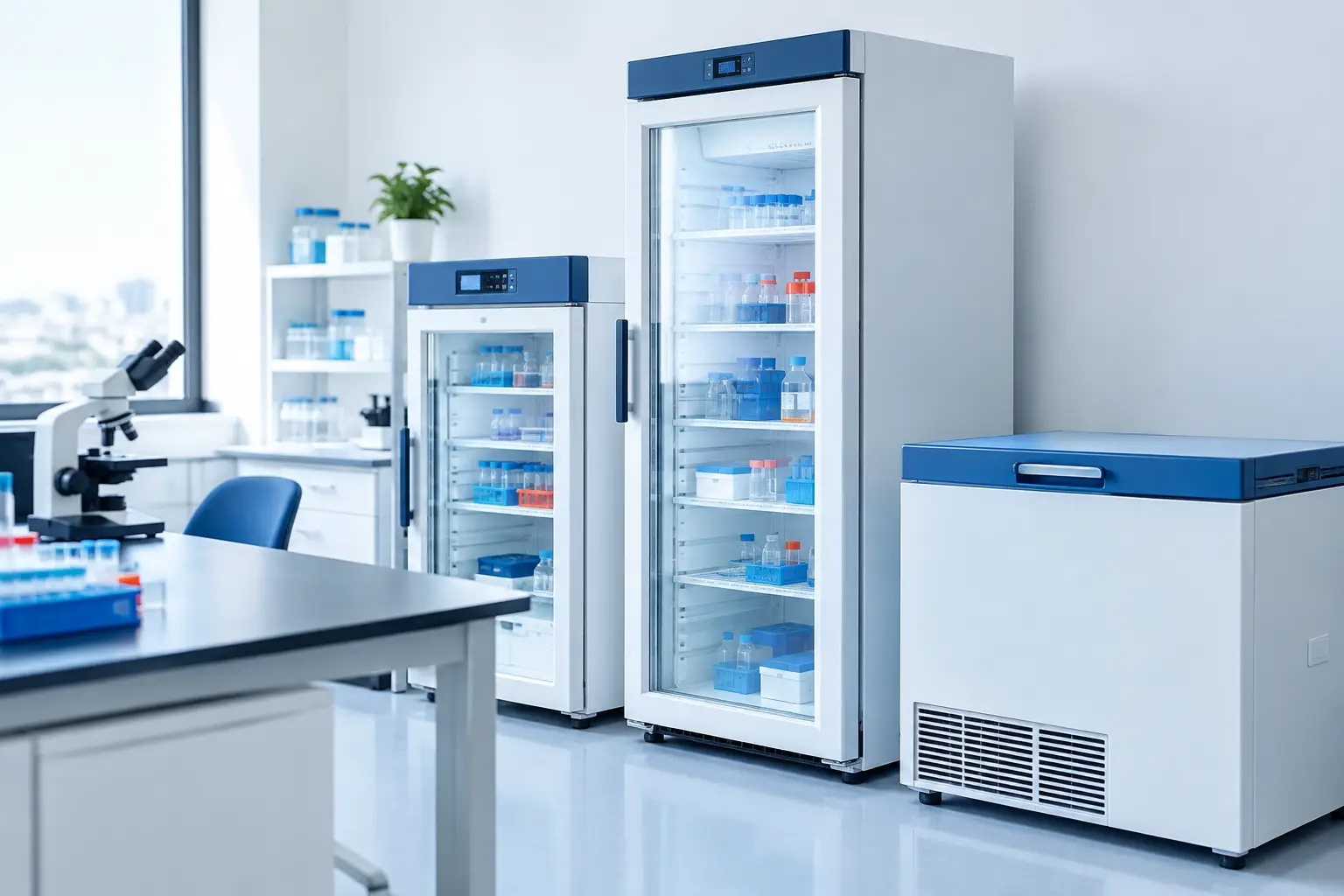
Choosing laboratory refrigerator cabinets is not about finding one model that suits every lab. It is about choosing a cabinet that can reliably store what you put inside. A unit that keeps closed reagent boxes at the right temperature may not be suitable for clinical samples, while a blood bank refrigerator can be more than you need if you only store culture media and standards. The wrong choice can mean losing material because a temperature excursion went unrecorded, or paying for features you will never use.
Start with the intended use, then compare the features that matter. In some cases, the simplest option in our refrigerated cabinets category is all you need.
Laboratory refrigerator cabinets: why a domestic fridge may not be suitable
A domestic refrigerator can seem like a sensible way to save money. The problems may not show up straight away, but they become clear when something goes wrong:
- No temperature record. If the unit is out of range for four hours over a weekend, there may be no way to know. In a laboratory subject to audits, without a temperature history you cannot demonstrate that the product remained suitable.
- No alarms. There may be no alert for high or low temperature, an open door or a power failure. These are common causes of material loss.
- Uneven temperature. A conventional fridge can have different temperatures at the top, bottom and door. That may not matter for a bottle of water, but it can matter for a vial.
- Defrost cycles. These can cause recurring temperature fluctuations that are not obvious because the display continues to show the setpoint.
If the stored items are not critical and there is no documentation requirement, a basic solution may be enough. If you store irreplaceable samples, expensive reagents or materials that need traceability, the decision changes.
Three questions to help choose a laboratory refrigerator
1. What temperature do you need, and how stable must it be?
A laboratory refrigerator operates in the positive-temperature refrigeration range. If your protocol requires freezing or long-term storage of sensitive biological material, you need a freezer or a cryogenic system, not a refrigerator. Within refrigerated storage, temperature stability matters more than the nominal setpoint. A unit that maintains ±1.5 °C with forced-air circulation is different from one that fluctuates by several degrees depending on its load and how often the door is opened.
2. Do you need to prove what happened inside the unit?
If you store blood products or patient samples, or work under a quality system that requires a temperature history, you need continuous recording and redundant alarms. For routine consumables and reagents, reliable temperature control and a maximum-minimum thermometer may be sufficient.
3. What capacity and storage turnover do you need?
A common mistake is sizing a cabinet for the busiest point of the year. A very large unit with a small load may perform less well than expected: each door opening introduces more ambient air in relation to the amount of cold material stored. Choose a size with a sensible margin over average occupancy rather than sizing for the highest historical load.
Choosing a pharmaceutical refrigerator by application
Reagents, culture media and consumables
This is the most common use and usually requires the fewest features. Prioritise usable capacity, adjustable shelves and good temperature uniformity. It can make sense to choose the most economical suitable model in the category. A chart recorder or sensors positioned to match product conditions may not be necessary. Paying for blood bank features to store buffers is money you do not need to spend.
Biological samples and cold-chain storage
When the contents are irreplaceable, what you are buying is protection against failure, not simply cooling. Look for audible and visual high- and low-temperature alarms, an open-door alarm and a power-failure alert. It is also important that recording continues during a power cut. A unit that stops recording at the critical moment cannot provide evidence of what happened.
Blood bank refrigerators and blood products
Blood products have specific storage requirements, making this the application that justifies a dedicated cabinet. The refrigerator needs to maintain the required temperature and provide a continuous record. The JP Selecta blood bank refrigerators supplied by Letslab are designed for this use, with a fixed temperature of +4 °C, stability of ±1.5 °C using forced-air circulation, and sensors positioned under the same conditions as the blood bags, rather than simply measuring the air at an arbitrary point in the chamber. They also have a low-temperature limit thermostat and a 7-day circular chart recorder.
All three models have the same set of alarms: low temperature at +2 °C, high temperature at +6 °C, open door, power failure and battery failure. The alarms have both visual and audible indicators.
Comparing three blood bank refrigerator capacities
| Capacity | Blood bags | Temperature | Typical laboratory use |
|---|---|---|---|
| 247 L | 90 | +4 °C, ±1.5 °C, forced air | Small unit, collection point or secondary storage |
| 394 L | 150 | +4 °C, ±1.5 °C, forced air | Medium-sized transfusion service |
| 1230 L | 480 | +4 °C, forced air | Reference centre or central store with high turnover |
The three cabinets share the same approach to safety; capacity is the main difference. The 247 L model also has a display resolution of 1 °C. The chart recorder in the 394 L model has a battery autonomy of 6 months, so recording continues if the power supply fails.
When not to buy a blood bank refrigerator
A dedicated blood bank refrigerator is not the right choice for every laboratory. Avoid unnecessary cost by checking these points first:
- You do not store blood products. A cabinet with a fixed +4 °C setpoint and alarms at +2/+6 °C is designed for a specific product. For reagents or kits that allow a wider temperature range, a general laboratory refrigerator may be suitable and costs considerably less.
- You need an adjustable temperature. These units operate at a fixed temperature. If your protocol requires a different setpoint, look for a model with adjustable control.
- Your actual occupancy is low. Choosing the 1230 L model “just in case” only makes sense if you have high turnover and enough floor space. If you usually store 90 or 150 blood bags, a 247 L or 394 L unit can meet your needs without taking up half the room.
- You need freezing, not refrigeration. A refrigerator cannot replace a freezer. For long-term storage below zero, you need a different equipment category.
Technical details that matter in everyday use
Forced-air circulation versus static cooling
Forced-air circulation distributes temperature throughout the chamber and helps the unit return to its setpoint after the door has been opened. In a fully loaded cabinet with frequent door openings, the difference is noticeable at the top and near the front, where static cooling tends to perform less well.
Sensor position
This detail is easy to overlook. An air sensor responds quickly when the door is opened and can trigger false alarms. A sensor positioned under the same conditions as the stored product, as in the JP Selecta blood bank refrigerators, reflects what is actually happening to the blood bag. That is the reading that matters for an audit.
Recording: a circular chart recorder or no record
A 7-day circular chart recorder has practical advantages over digital solutions without a backup. It can be read at a glance, the chart can be archived as a physical record, and the recorder continues running on battery if the mains power fails. If your quality system requires evidence, the chart provides it without relying on someone to download a file.
Quick guide to choosing a laboratory refrigerator cabinet
- Reagents and consumables without documentation requirements: choose the most economical general-purpose refrigerator that fits your capacity needs.
- Valuable samples or a traceable cold chain: prioritise comprehensive alarms and recording that continues during a power cut.
- Blood products: choose a dedicated blood bank refrigerator.
For a medium-sized transfusion service, the 394 L blood bank refrigerator at +4 °C with a 7-day chart recorder is a practical balance between capacity and floor space. It stores 150 blood bags and features forced-air circulation, ±1.5 °C stability, high- and low-temperature alarms, an open-door alarm, power- and battery-failure alarms, and a recorder with 6 months of battery autonomy. If none of these options fits your application, the Letslab catalogue includes other laboratory equipment to consider.
Not sure which one is right for you?
We have been equipping laboratories since 2008. Tell us what you need it for and we will tell you what to buy and what you can do without.
Talk to a specialist