
Laboratory Sieves: How to Choose the Right Ones
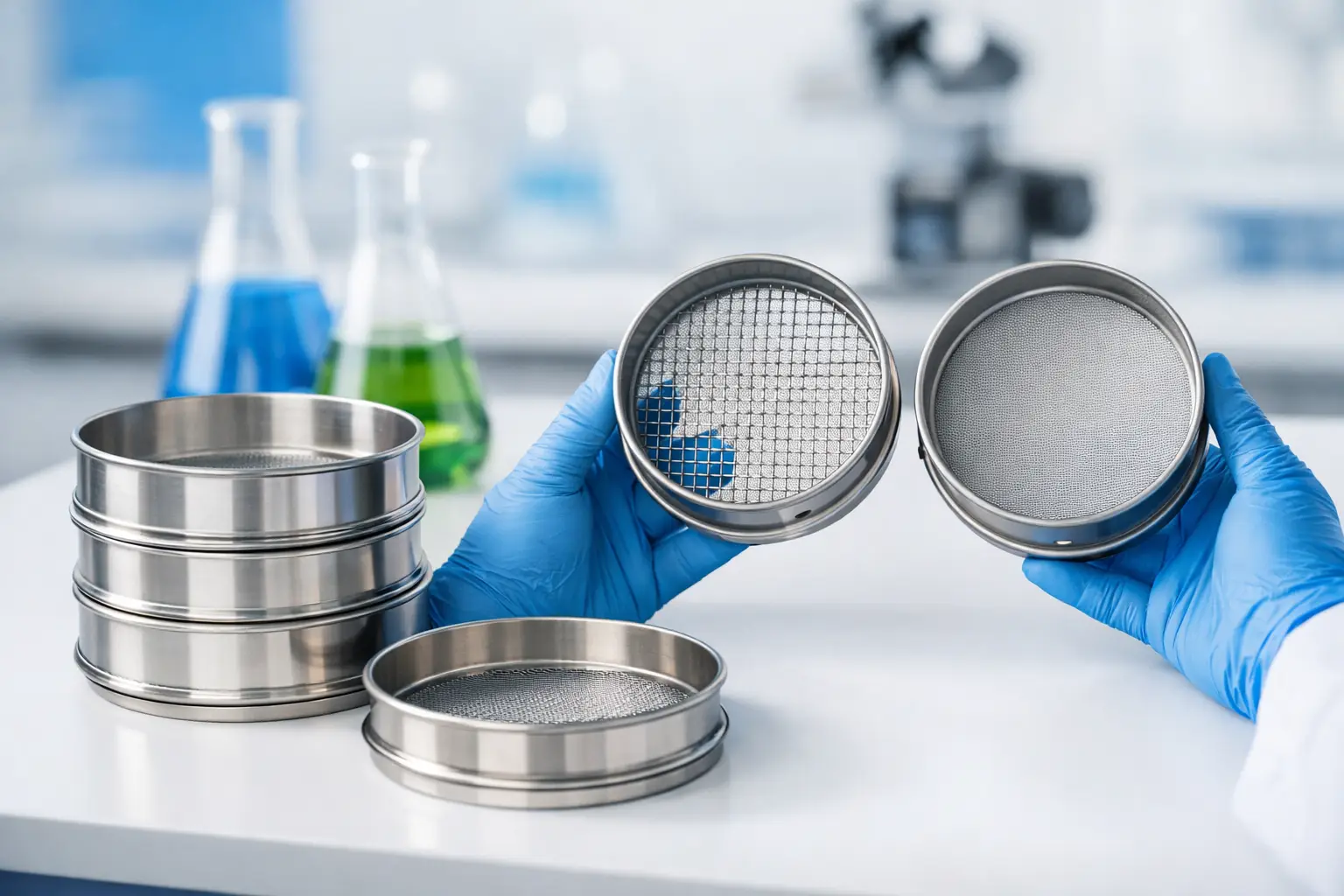
When a particle size analysis goes wrong, the cause is rarely just one factor. The problem may be an unsuitable choice of equipment, an unsuitable mesh or unrealistic expectations about working conditions. Choosing sieves is not simply a matter of selecting an accessory. It affects quality control, repeatability and the reliability of results whenever particle size matters.
In quality control laboratories, industrial settings, universities and R&D departments, sieving remains a useful reference method because it produces clear, comparable results that are easy to include in routine analysis. It works well when the sieve matches the sample, method and workload. Choosing on price or immediate availability alone may solve a one-off purchasing need, but it may not suit the process.
What laboratory sieves are used for
Laboratory sieves separate particles by size using a mesh with a defined aperture. Their most common application is particle size analysis, but they are also used for sample preparation, contaminant checks, classification of solid materials and verification of production specifications.
They are used across a range of sectors. In pharmaceutical and chemical laboratories, they help check raw materials and powders. In food production, they can be used to assess the particle size of flour, additives and dry ingredients. In construction and materials testing, they are used to analyse aggregates, cement and minerals. In environmental laboratories, sieving can be useful for sediments and soils. In each case, the aim is to separate material reproducibly so it can be assessed consistently.
Sieving combines straightforward operation with a sound methodological basis. However, not every sample behaves well on a mesh. Hygroscopic, electrostatic, very fine or agglomerating materials may require adjustments to the time or method, or a complementary technique.
How to choose sieves for your laboratory
Start by asking what the test needs to establish. The requirements for separating a coarse fraction in a teaching laboratory differ from those for checking tight tolerances in quality control under an internal procedure or a standard. Several practical criteria should guide the choice.
Mesh aperture and particle size range
The mesh aperture determines the sieve cut-off. Choose it according to the expected particle size and the range the method needs to assess. If you use a series of sieves, the progression between apertures should make analytical sense. Too many steps can lengthen the test without adding useful information, while too few can conceal relevant differences between batches.
A common purchasing mistake is to choose an aperture based only on its nominal equivalence. Manufacturing tolerances, the applicable standard and how well the mesh holds up in use also matter. To obtain comparable results between operators or sites, use a consistent, well-documented series.
Sieve diameter and sample volume
The diameter affects capacity and compatibility with the sieve shaker. A small sieve may be suitable for small samples or routine tests with low volumes. If the sample load is high, however, separation can become inefficient because particles have too little room to redistribute across the mesh.
A larger format is not always better. It takes up more space, requires compatible accessories and may offer no benefit when sample volumes are steady and moderate. Match the diameter to the laboratory’s actual procedure rather than the largest possible workload.
Frame and mesh material
Stainless steel is a common choice because of its chemical resistance, durability and ease of cleaning. It is often a practical option for frequent use and helps reduce corrosion issues. Other materials are available for specific requirements related to chemical compatibility, weight or process needs.
Consider not only the strength of the frame but also the quality of the mesh and how it is joined to the sieve body. A well-made sieve is better able to maintain mesh tension, resist deformation and deliver consistent performance between tests. For repeat purchases, this can matter more than a small difference in unit cost.
Standards, calibration and traceability for laboratory test sieves
In laboratories that follow defined procedures, sieves should meet recognised standards and the documentation requirements of the quality system. A nominal size that appears correct is not enough. Check that the sieve meets the applicable standard, can be identified unambiguously and remains in suitable condition to produce reliable data.
The need for calibration or verification depends on the level of control required. In some settings, periodic checks of physical condition and internal usage records may be sufficient. Where audits, method validation or inter-laboratory comparisons are involved, certificates and tighter control of the sieve’s service life may be appropriate.
Not every laboratory needs the same level of documentation. Buying beyond the required specification can add cost without a practical benefit, while choosing too little specification can cause problems when results need to be justified, tests repeated or an inspection answered.
Manual sieving or a sieve shaker?
Manual sieving can still be suitable for occasional tasks, simple preparation or laboratories with a low analytical workload. It is a flexible option, particularly when the samples do not require close comparison between test series. Challenges can arise when the workload increases or several users need to obtain consistent results.
A sieve shaker provides a controlled movement, allowing the laboratory to set defined times and consistent amplitudes while processing stacked sieves with less dependence on the operator. For routine testing and quality control, this can reduce variability and improve productivity.
Automation is not always necessary. If the laboratory carries out only a few tests each month, the investment may not be justified. When sieving is part of the daily workflow, however, a mechanised process can make a difference to testing time, traceability and workload.
Cleaning and service life of laboratory sieves
A well-chosen sieve can quickly lose its value if it is not handled properly. The mesh is sensitive: aggressive cleaning, unsuitable tools or unprotected stacked storage can deform it and change the particle passage without obvious visible damage.
Choose a cleaning method that suits the sample. Controlled brushing may be enough for dry, non-adherent residue. More difficult materials may need a cleaning method compatible with the Stainless steel mesh sieves 60mm Ø and the acceptable level of contamination. The key is to avoid methods that alter the mesh geometry.
It is also useful to record usage when test results directly affect product release or quality decisions. There is no need to create a complex file for every sieve, but set clear criteria for inspection, removal from service and replacement. Damage is not always visible. Sometimes a worn sieve simply starts producing less consistent results.
What to consider when buying lab sieves
Purchasing decisions should consider more than the sieve itself. Check the availability of complete series, compatible lids and receivers, certification options, continuity of supply and technical support to select products that match the method. Standardising equipment across users or sites can reduce problems and make replacements easier.
It is also worth planning for changes in workload. A laboratory that currently needs only two or three sizes may soon require a more complete set if it adds tests or new sample types. Choosing a scalable setup can help avoid duplicates and improve stock management.
Working with a specialist distributor such as Letslab can help laboratories purchase sieves alongside related consumables and equipment through one supply channel, with technical support and continuity of supply.
The best sieve is not necessarily the most expensive or best known. It is the one that suits the sample, the method and the laboratory’s actual needs. Make that choice carefully and sieving can provide a reliable basis for the data you need.
Not sure which one is right for you?
We have been equipping laboratories since 2008. Tell us what you need it for and we will tell you what to buy and what you can do without.
Talk to a specialist