
Laboratory Autoclave: What Is It Used For?
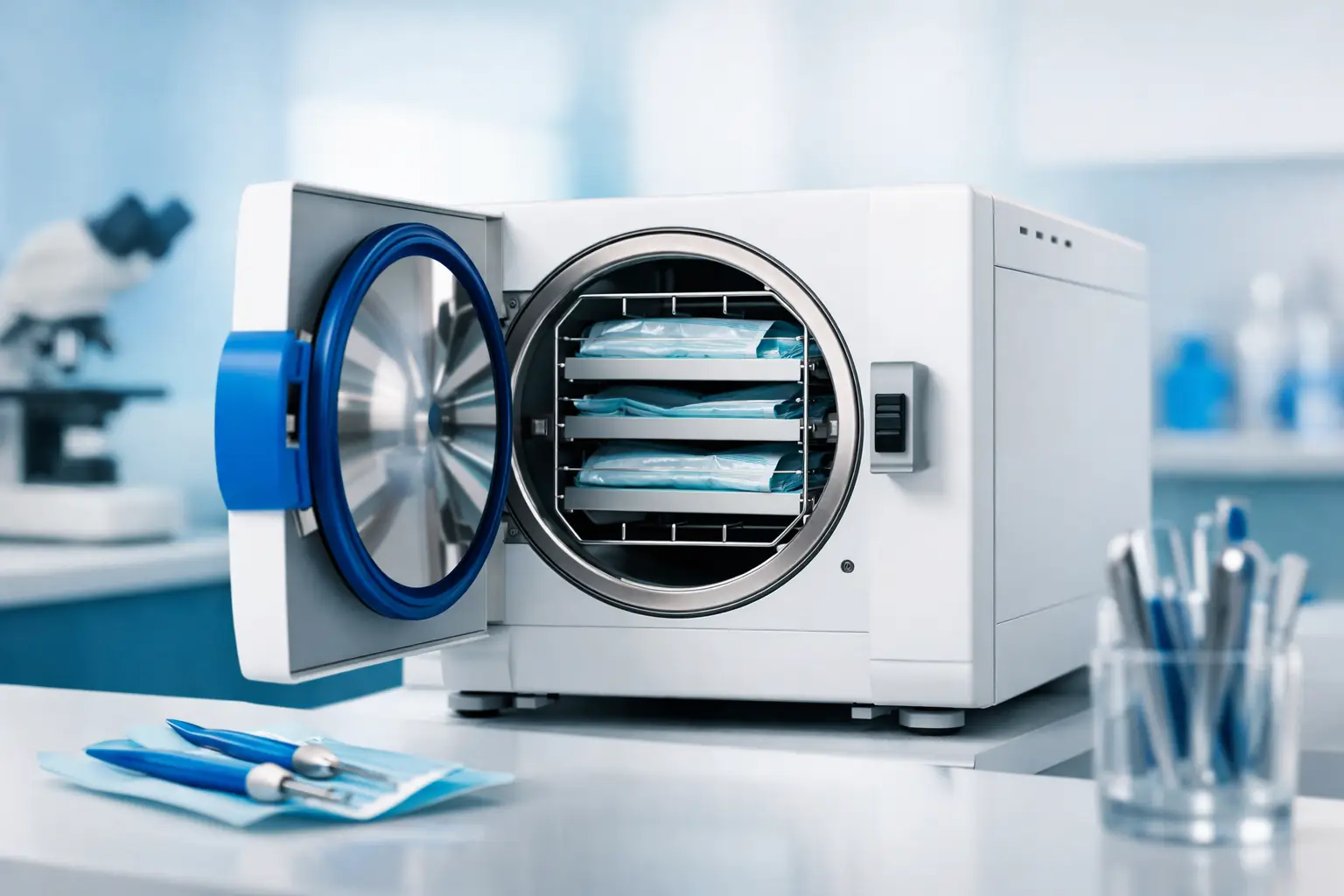
When a laboratory needs to sterilise critical equipment reliably, the key question is not just which machine to buy, but what a laboratory autoclave is used for. Class B models are designed to handle complex loads, helping laboratories process different types of material with a controlled, repeatable cycle.
What is a laboratory autoclave used for?
A Class B laboratory autoclave sterilises material using saturated steam under pressure. It is particularly suited to loads that are not simple, including solid instruments, porous materials, hollow items and wrapped loads. Not every autoclave can process these load types with the same effectiveness.
The defining feature is a fractionated pre-vacuum system. Before steam enters the chamber, the vacuum removes air from the chamber and from inside the load. This helps steam reach areas that are harder to access, such as lumens, cavities, packaging and materials that are more resistant to heat transfer. For laboratory work, this can make the difference between a theoretical sterilisation process and one that can be validated.
A Class B autoclave is not simply for better disinfection. It is used when the process requires reliable, documentable sterility. This makes it relevant to microbiology labs, research facilities, healthcare settings, quality control and pathology, as well as other environments where cross-contamination, biological waste or reusable equipment must be managed carefully.
What can a Class B laboratory autoclave sterilise?
A Class B model is useful when a lab handles mixed loads. Different materials present different challenges: a porous pack, a hollow item and a wrapped instrument do not behave like an exposed metal forceps on a tray.
With a suitable load and cycle, these autoclaves can sterilise reusable metal instruments, glass that can withstand the process, porous containers and utensils, wrapped materials intended to remain sterile after the cycle, and items with internal areas that are difficult to reach. They may also be used to treat certain biological waste before it is managed, provided the equipment and the laboratory’s internal protocol allow for this use.
However, Class B does not mean that every material can go into the autoclave. Some plastics, heat-sensitive reagents, hermetically sealed products and materials that are incompatible with steam and pressure require other methods. The right choice depends on the load, the validated procedure and the instructions for both the autoclave and the material.
Why choose a Class B autoclave for a lab?
Sterilisation is part of process control in a professional laboratory, not just an auxiliary task. If microorganisms and spores are not reliably eliminated throughout the load, problems can follow, including inaccurate results, contaminated cultures, repeated analyses, quality issues or risks to staff.
Class B autoclaves are designed to handle the less uniform loads found in real laboratory work. The pre-vacuum improves steam penetration and reduces the likelihood of air pockets. This matters when processing instruments with cavities, wrapped material or a mix of formats in one cycle, as long as the load stays within the limits of the equipment.
Many labs also need to demonstrate that a cycle has been completed correctly. In these settings, a Class B lab autoclave can fit into routines that use cycle records, defined parameters and verification. For technical purchasing or replacement, this can be just as important as chamber capacity or equipment size.
Class B autoclaves compared with other laboratory autoclaves
Different laboratory autoclaves are designed for different types of work. A less complex model may be suitable for basic loads, such as solid material that is not wrapped. It may not be adequate when the lab needs to sterilise hollow items, porous loads or packaged material that must remain sterile after the cycle.
The difference is not just power or temperature. It also depends on how air is removed and how steam enters the load. Class B autoclaves use fractionated pre-vacuum and post-vacuum, supporting more complete sterilisation and more effective drying. This design can reduce uncertainty in settings with demanding technical requirements.
That does not mean every lab needs the most advanced option. If the load is simple, volumes are low and there is no need to process hollow or wrapped items, another type of autoclave may be sufficient. Choose according to the intended use, rather than assuming that more capability is always better.
Common applications for autoclaves in laboratories
Class B models are used across scientific and technical settings because they can meet a range of sterilisation needs. In a microbiology lab, an autoclave for microbiology lab use can process reusable instruments and certain biological waste before controlled removal. In research laboratories, it can help maintain cleaner and more consistent working conditions, particularly when cultures or sensitive samples are handled.
In pathology and clinical or healthcare settings, the ability to process wrapped material and items with complex shapes can be important. In industrial quality control, autoclaves can help standardise the sterilisation of supporting materials and reduce contamination-related variation. They are also used in universities and technology centres where different users may need a versatile piece of equipment.
An autoclave is only one part of the workflow. The process also involves pre-cleaning, choosing the right cycle, loading the chamber correctly, checking drying and storing sterilised material afterwards. If any of these steps is missed, the equipment’s real-world performance can suffer, even when the machine is technically advanced.
What to check before buying a laboratory autoclave
Before choosing a Class B laboratory autoclave, define what your lab needs it to process. This helps you avoid buying a unit that is either too large for the task or not capable of handling the loads you work with.
Start by identifying the usual load. Volume matters, but so does the type of material: consider whether you process hollow instruments, porous items or wrapped loads, and whether efficient drying is needed. Then check chamber capacity, available programmes, cycle traceability, maintenance requirements and the technical support available.
Frequency of use is another practical consideration. A lab running several cycles a day needs a machine suited to that workload and an operating process that staff can use easily. Occasional use may call for a different configuration. Compatibility with internal protocols, validation requirements and the space available should also inform the decision.
For purchasing teams, one useful way to reduce problems is to treat the autoclave as part of the laboratory workflow rather than as a standalone machine. Accessories, consumables, installation, qualification and after-sales service can all matter as much as the technical specification.
Common mistakes when using a lab autoclave
A Class B autoclave supports a high level of process control, but it cannot compensate for poor practice. Common mistakes include overloading the chamber, mixing incompatible materials and choosing the wrong cycle. Wrapping a load does not guarantee sterility on its own; the outcome depends on the whole process.
Preventive maintenance also matters. Seals, filters, water quality, sensors and periodic checks all affect how the equipment performs. In laboratories with documentation requirements, it is not enough for the autoclave to appear to be working properly. Its performance must be checked against the expected parameters.
When the equipment is used consistently and the cycle matches the load, a Class B model offers greater versatility without compromising process reliability. It is often the preferred choice when sterilisation cannot be treated as a partial or approximate step.
Choosing the right autoclave is an operational decision. If your lab needs to process complex loads, keep wrapped material sterile after the cycle and maintain a high level of process control, a Class B model can provide the capabilities needed to support daily work and avoid preventable risks.
Not sure which one is right for you?
We have been equipping laboratories since 2008. Tell us what you need it for and we will tell you what to buy and what you can do without.
Talk to a specialist